

In this article
Anthropic’s September 2026 study, Economic Scenarios for Transformative AI, explores how AI could increase economic output while leaving some workers worse off. Written by Anton Korinek, Charles I. Jones, Szymon Sacher, Tess Cotter and Peter McCrory, it makes a useful distinction: a growing economy does not guarantee that every worker benefits.
Key takeaways
- Higher economic output does not guarantee gains for every worker.
- Jobs contain different tasks, so AI exposure varies within and across occupations.
- The study offers conditional scenarios, not predictions about individual job security.
What Anthropic’s AI jobs study does and does not predict
The paper models modest, substantial and extreme scenarios for the US economy through 2030. These are conditional possibilities, not forecasts, and the authors assign no probabilities to them. Wage comparisons are against the same economy without AI, not guaranteed reductions from today’s paycheck.
The model examines broad occupational groups, not individual job security. It also leaves out policy responses, business cycles and other important forces. It helps explain possible outcomes under different assumptions, rather than telling you whether your employer will replace your role.
Will AI take my job? Start with tasks, not titles
A useful starting point is to break a job into tasks. AI might assist some, automate others, leave some unchanged or create new work. Lower costs could support more demand, while automation could reduce the human hours needed for existing work. New human tasks can also offset some of those reductions.
That is why the same tool can have different consequences in different organizations. What matters includes what it can do reliably, how it is adopted, and whether demand or new responsibilities grow enough to use the time saved.

Why productivity growth does not guarantee higher wages
Income is divided between wages and returns to owners of software, servers and equipment. If automated systems perform more work, a larger share may flow to those owners. Average wages can rise while exposed occupational groups fall behind. Moving into a different occupation takes time, skills and an available job match.

How AI could change work across different roles
The following are hypothetical editorial examples, not findings about these occupations from the study. They illustrate questions to investigate, not a ranking of safe and unsafe careers. Different tasks, employers and sectors can face very different exposure.
- Customer support: Software could handle routine initial questions. If inquiry volume grows or new customer-service responsibilities emerge, staff could spend more time resolving complex cases. If those opportunities do not offset automated work, required human hours could decline.
- Software engineering: Tools could help generate boilerplate code or run basic tests. Engineers could spend more time on system design, security and user requirements. Whether that means more projects, a different workload or fewer hours depends on what the organization needs.
- Education: Tools could reduce time spent organizing schedules or preparing routine materials. A school could redirect that time toward instruction and mentoring. Time savings alone do not determine staffing decisions, classroom needs or the quality of support students receive.
- Field service: Diagnostic software could shorten troubleshooting. Technicians could complete more calls or take on preventive maintenance work. Alternatively, fewer hours might be needed for the same service volume. A physical component to a job does not make every task immune to change.

Four questions for workers and employers
Use these editorial prompts to make a workplace discussion concrete. They are not a personal risk score or prescriptions from the paper.
- Task mix: List the steps in a typical week. Which involve drafting, checking, explaining, physical work or decisions? Assess the tasks separately rather than assuming a job title answers the question.
- Demand and new responsibilities: If work takes less time, what useful work will fill the gap? Identify actual customers, projects or responsibilities rather than assuming efficiency automatically creates growth.
- Accountability: Who checks outputs, handles exceptions and takes responsibility when something goes wrong? Include that time when judging whether a tool improves the workflow.
- Transition support: What training, time and realistic opportunities are available if responsibilities change? Ask how people move into new work, not simply whether they should learn AI.
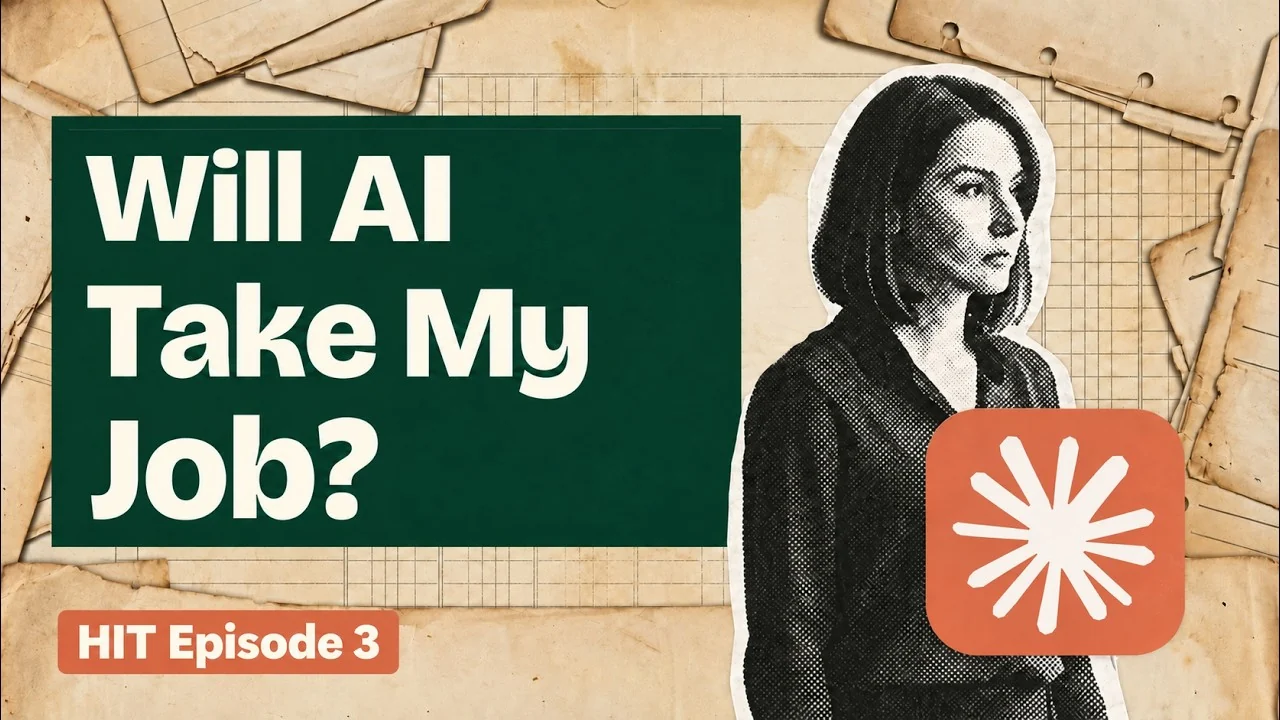
The useful question is not only how much more AI lets us produce, but how the people doing the work share in the result. How It Thinks Episode 3 explores these ideas through a fictional worker’s story.
Sources
- AI & work
- AI jobs
- tasks
- wages
- productivity
- economic scenarios